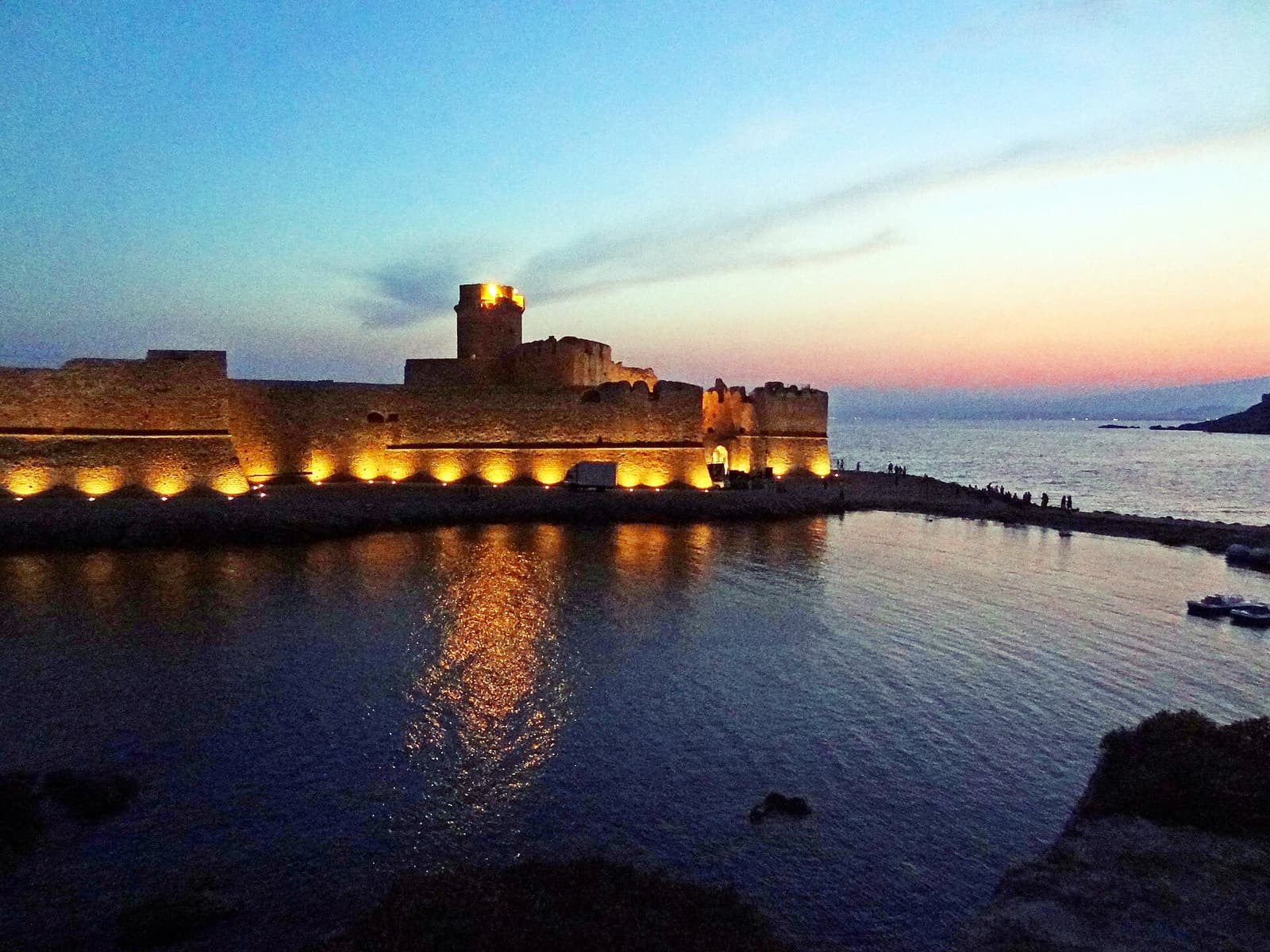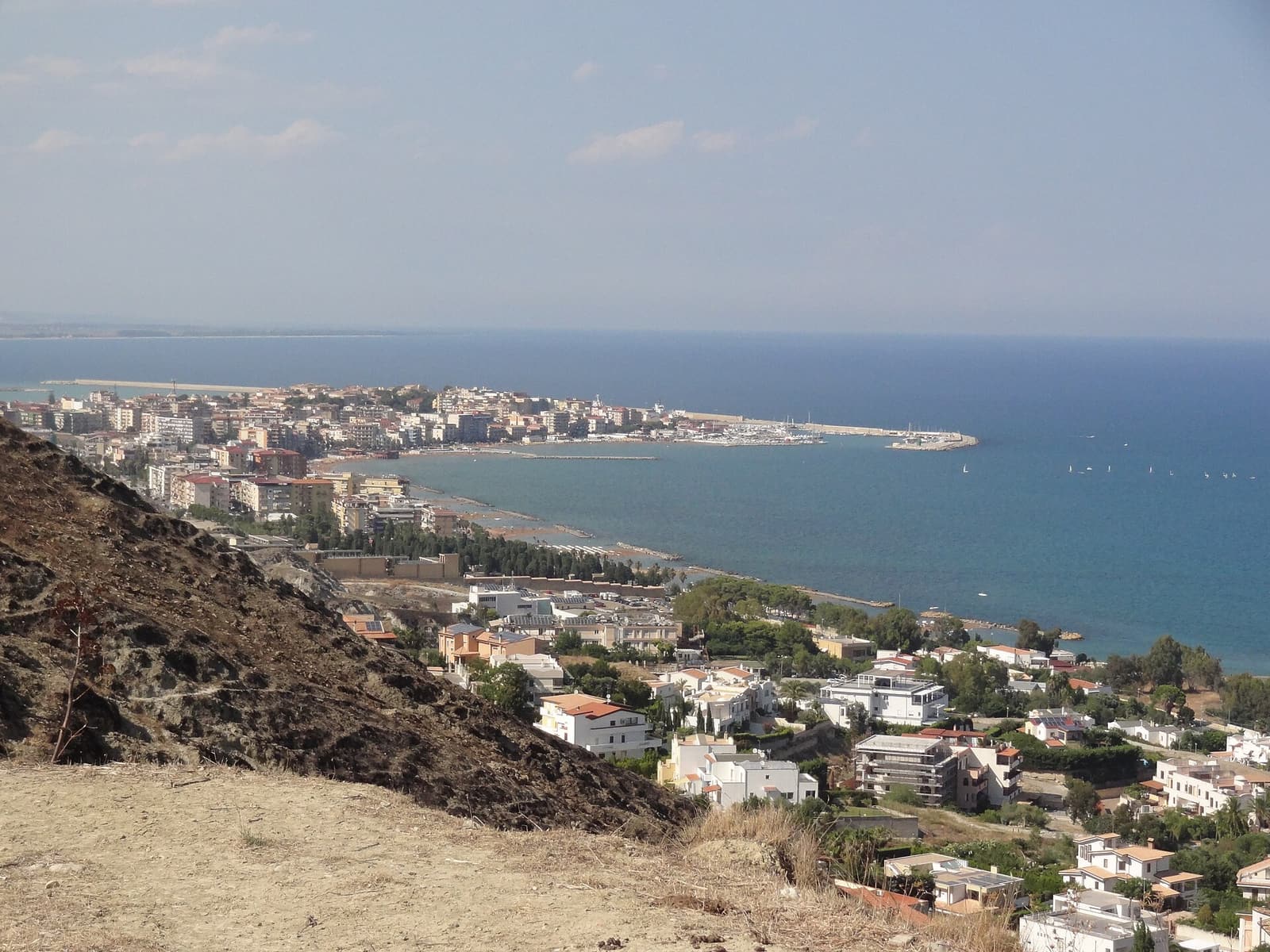
Crotone is the capital of a small province on the Ionian coast of Calabria, the “ball of the foot” of the Italian boot. It is a modern, unpretentious port city with a past out of all proportion to its size, a coast protected by one of Italy’s largest marine reserves, and a mountain hinterland that climbs to nearly 2,000 metres. This guide is the long version: read it once and you will know how to plan your days.
Crotone at a glance
- Where: eastern Calabria, on the Ionian Sea, about 100 km from Lamezia Terme airport.
- Size: a city of roughly 60,000 people; the province counts 27 municipalities.
- Known for: ancient Kroton, Pythagoras, Capo Colonna, Le Castella, Cirò wine, pecorino crotonese.
- Best for: archaeology and history, uncrowded beaches, snorkelling, food and wine, road trips.
- Language: Italian and the local dialect; English is not widely spoken outside hotels.
- Currency: euro.
A short history
Kroton was founded around 710 BC by Achaean Greeks, traditionally led by Myscellus on the advice of the oracle at Delphi. With a good harbour and fertile land it grew into one of the leading cities of Magna Graecia. Its athletes dominated the Olympic games — none more than Milo, six times wrestling champion — and its physicians were sought after as far away as the Persian court.
Around 530 BC the philosopher Pythagoras arrived from Samos and founded the community that made the city an intellectual capital: part school, part religious brotherhood, devoted to number, music and a disciplined way of life. In 510 BC Kroton destroyed its wealthy rival Sybaris. Decline followed in the 4th and 3rd centuries BC under pressure from Syracuse, the Bruttians and then Rome; Hannibal made the area his last base in Italy before sailing for Africa in 203 BC, and a Roman colony was planted in 194 BC.
In the Middle Ages the town shrank to the hill of the old acropolis, held in turn by Byzantines, Normans, Swabians, Angevins and Aragonese. The Spanish rebuilt the castle and walls in the 16th century against the Ottoman threat. Known for centuries as Cotrone, the city took back its ancient name in 1928, industrialised in the 20th century and became capital of its own province in the 1990s.
What to see
The essentials, in rough order of priority:
- Capo Colonna — the last column of the temple of Hera Lacinia, in an archaeological park by the sea.
- National Archaeological Museum — the Treasure of Hera and the story of Kroton.
- Le Castella — the Aragonese fortress on its islet.
- Castle of Charles V and the old town and Duomo.
- Capo Rizzuto Marine Protected Area — coves, snorkelling and boat trips.
- Santa Severina — Byzantine baptistery and Norman castle on a crag.
- Cirò — wineries and long beaches.
- Sila National Park, with San Giovanni in Fiore on the way and the Valli Cupe canyons to the south.
 Crotone city & Capo Colonna
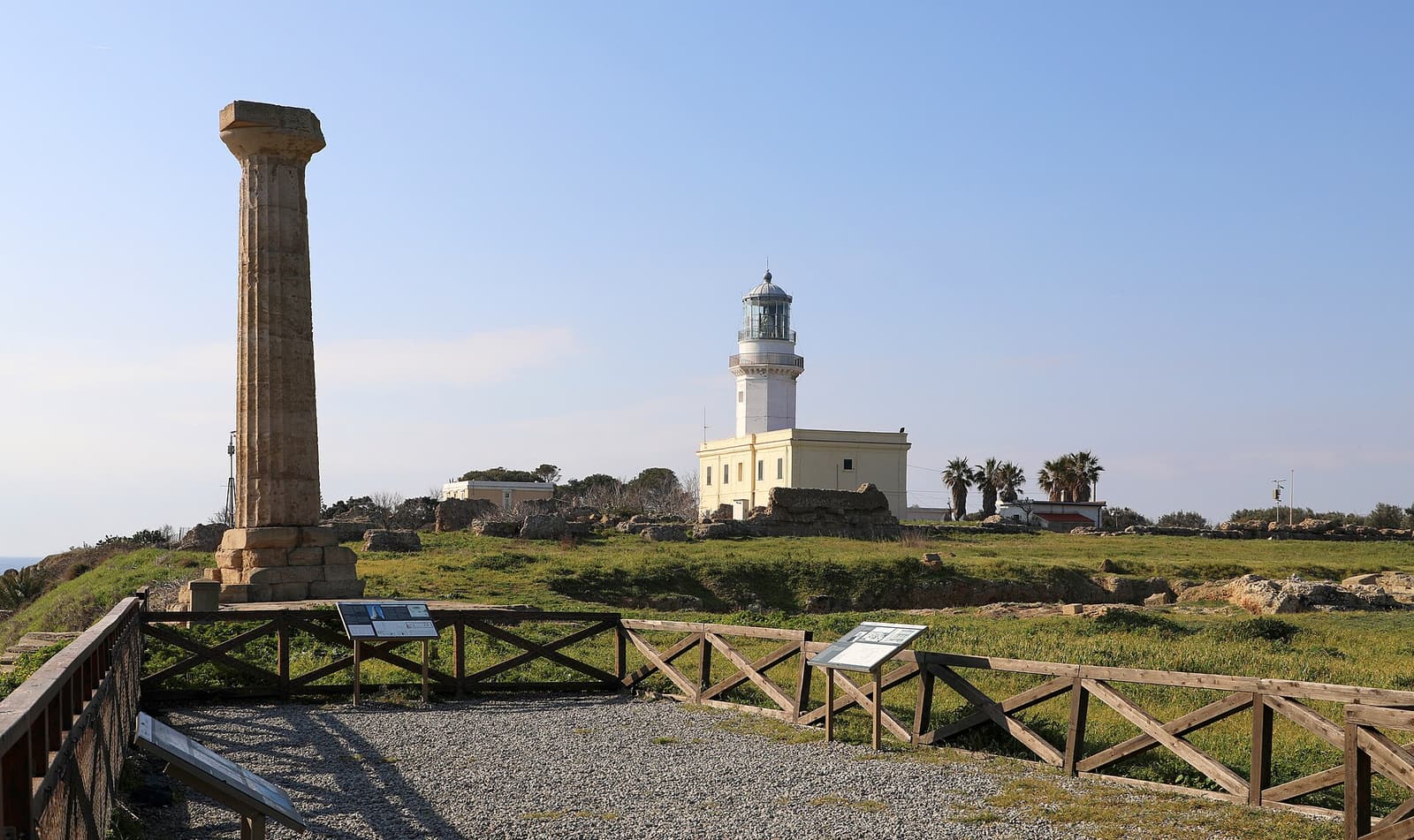
 Capo Colonna
One Doric column above the Ionian Sea
The headland that gave Crotone its emblem: a single standing column of the great temple of Hera Lacinia, once among the most revered sanctuaries of Magna Graecia, set in an archaeological park with a museum, a pilgrimage church and a 16th-century watchtower.
 The Ionian coast
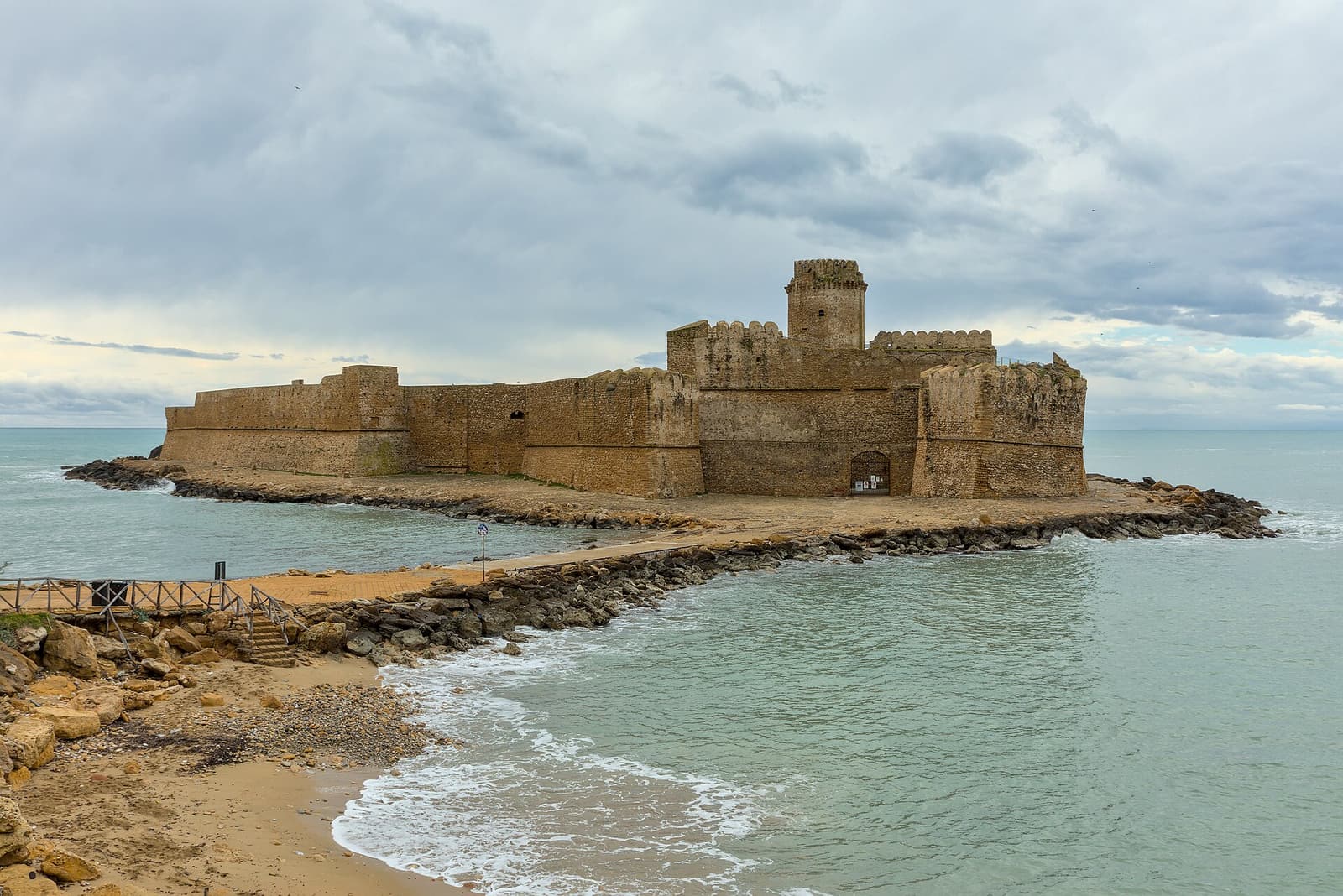
 Le Castella
A fortress that rises out of the sea
Calabria’s most photographed castle: an Aragonese fortress on a tiny islet, joined to a fishing village by a thin strip of land. Around it are clear shallows, sandy beaches and the boats of the Capo Rizzuto marine reserve.
 Crotone city & Capo Colonna
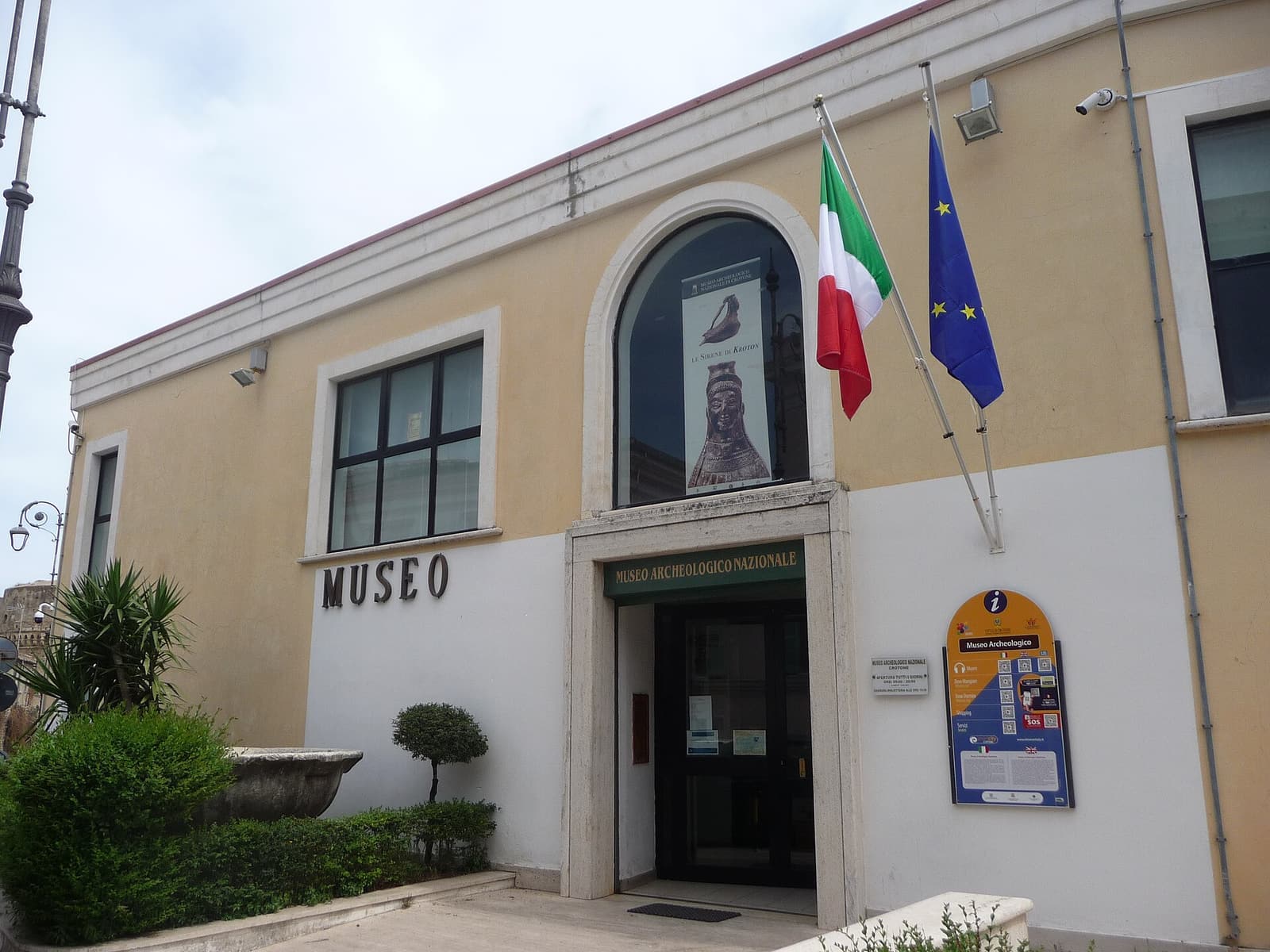
 National Archaeological Museum
Home of the Treasure of Hera
Crotone’s national museum, a few steps from the castle, tells the story of ancient Kroton from prehistory to Rome. Its star is the Treasure of Hera from Capo Colonna — above all a gold diadem of extraordinary delicacy.
 Crotone city & Capo Colonna
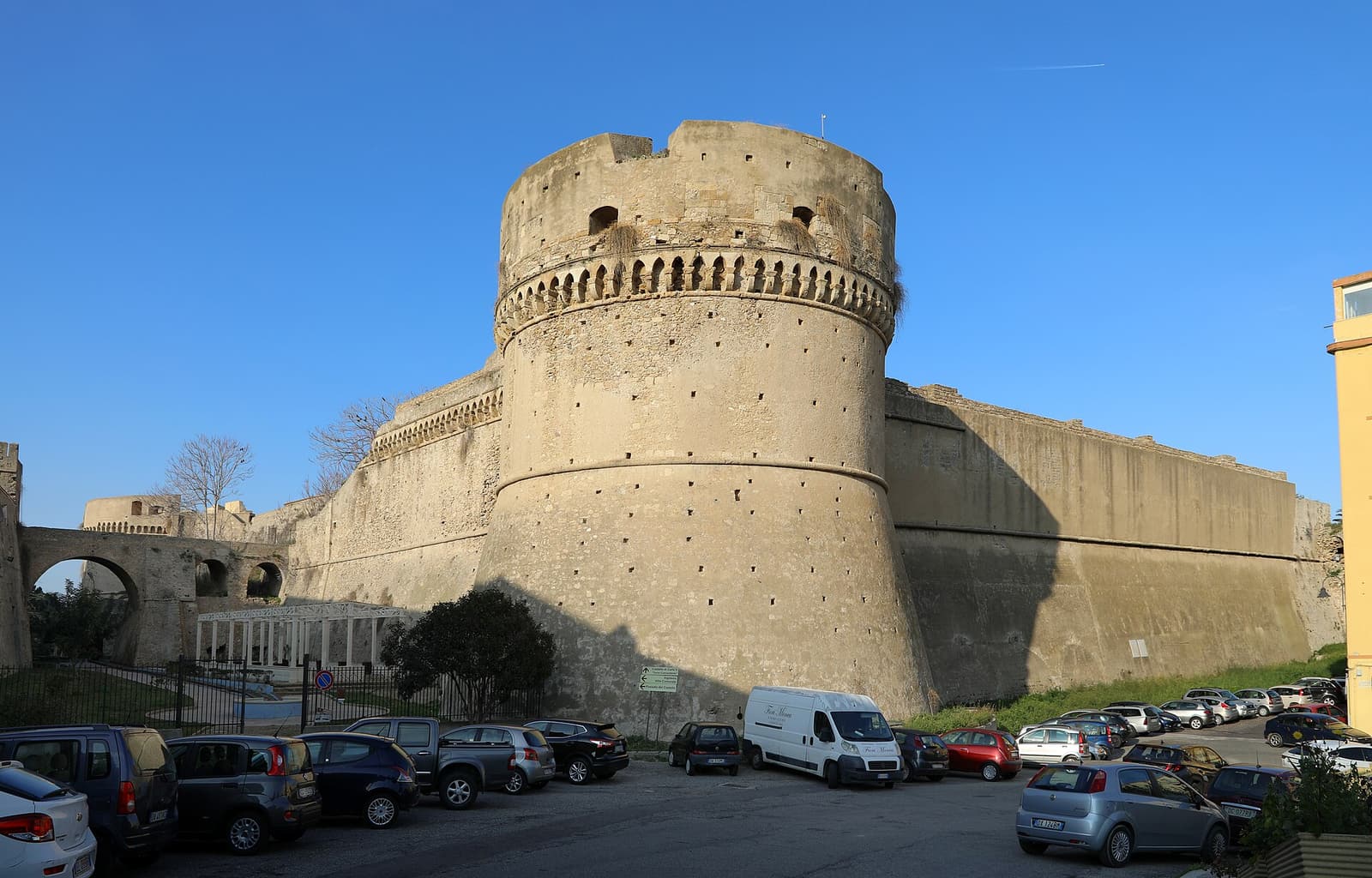
 Castle of Charles V
The fortress that guards the old town
A massive polygonal fortress crowning the old acropolis of Kroton. Founded in the early Middle Ages and rebuilt in the 16th century under Emperor Charles V, it still dominates the port with its two great round towers.
See all of them, with directions and tours, in our things to see guide.
Suggested itineraries
One day
Morning at Capo Colonna, then the archaeological museum and a walk through the old town to the castle. Lunch on the lungomare. Drive to Le Castella for a swim and the fortress in late-afternoon light; dinner there or back in town.
Three days
- Day 1 — the city: museum, Duomo, old town, castle, beach and passeggiata.
- Day 2 — the coast: Capo Colonna early, then the coves of Capo Rizzuto and an evening at Le Castella.
- Day 3 — inland and wine: Santa Severina in the morning, lunch in the Marchesato, then north to a Cirò winery for a late-afternoon tasting.
Five days
Add a full day in the Sila — San Giovanni in Fiore, Lorica and Lake Arvo, or Lake Ampollino — and either a lazy beach day inside the marine reserve or a hike in the Valli Cupe. With a week, continue across Calabria to Tropea and the Tyrrhenian coast.
What it costs
Crotone is good value by Italian standards — noticeably cheaper than Tropea or Puglia in summer. Indicative prices at the time of writing; check current rates:
| Item | Typical price |
|---|---|
| Espresso at the bar | ≈ €1–1.30 |
| Pizza and a drink | ≈ €10–15 |
| Fish dinner with wine, per person | ≈ €30–45 |
| Umbrella + two loungers (per day) | ≈ €15–30, more in August |
| Museum and castle tickets | Free to a few euros each |
| Cirò winery tasting | From ≈ €25 |
| Hire car (per day) | From ≈ €35 off-season; much more in August |
| B&B double, per night | ≈ €60–100 |
| Hotel or resort double, per night | ≈ €90–200+, by season |
What to eat and drink
The cooking of the Crotone area joins the sea, the sheep pastures of the Marchesato and Calabria’s love of chilli.
- Pecorino Crotonese: the local sheep’s-milk cheese, with protected (DOP) status — mild when young, sharp and crumbly when aged.
- Sardella: a fiery paste of tiny fish, chilli and wild fennel, spread on bread. A speciality of the coast north of Crotone.
- ’Nduja: Calabria’s famous soft, spreadable chilli salami, found on every antipasto board.
- Fish: grilled catch of the day, swordfish, and quadaru, the fishermen’s soup of Crotone.
- Pasta: home-made cavatelli and maccheroni with pork or goat ragù; pipi e patate (peppers and potatoes) on the side.
- From the Sila: porcini mushrooms, potatoes, caciocavallo cheese and cured pork.
- Wine: Cirò in red, rosato and white, and the smaller neighbouring appellations of Melissa and Sant’Anna di Isola Capo Rizzuto.
Restaurants serve lunch from about 12:30 to 14:30 and dinner from 20:00; in summer nobody eats early. Many close one day a week.
Where to stay
You have two real choices: Crotone city, for restaurants, culture and transport, or the Le Castella and Capo Rizzuto coast, for beaches and resort life. Our where to stay page compares both with hand-picked hotels.
Safety and health
- Crotone is a normal southern Italian provincial city and visitors rarely have problems. Use ordinary common sense with valuables and do not leave anything visible in a parked car.
- The main risk is the road: take the SS106 seriously (see getting here).
- Summer sun is fierce. Avoid the middle of the day at Capo Colonna and on boats, drink plenty and use sun protection.
- At sea, respect the flags, the reserve zones and local advice about currents and jellyfish.
- Pharmacies are well stocked; the emergency number is 112. EU visitors should carry their EHIC/GHIC card; others need travel insurance.
- Tap water is generally safe to drink, though many locals prefer bottled.
Money and practicalities
- Cash and cards: cards are accepted in most hotels, restaurants and supermarkets, but small bars, beach kiosks, markets and rural trattorie may want cash. ATMs are easy to find in the city, scarcer in villages.
- Opening hours: shops close for a long lunch break, roughly 13:00–16:30, and most are shut on Sunday.
- Tourist tax: accommodation may add a small per-night city tax.
- Language: learn a few words of Italian — it is appreciated, and outside hotels it is often necessary.
- Connectivity: mobile coverage is good on the coast and patchy in the Sila.
- Plugs: Italian type L and European type C/F, 230 V.
What to pack
- Summer: light clothes, a hat, strong sunscreen, swimwear, a mask and snorkel, and sandals that can cope with rocks.
- Spring and autumn: layers and a light waterproof.
- For the Sila: a fleece and proper shoes even in August; real winter clothing from December to March.
- For churches: something to cover shoulders and knees.