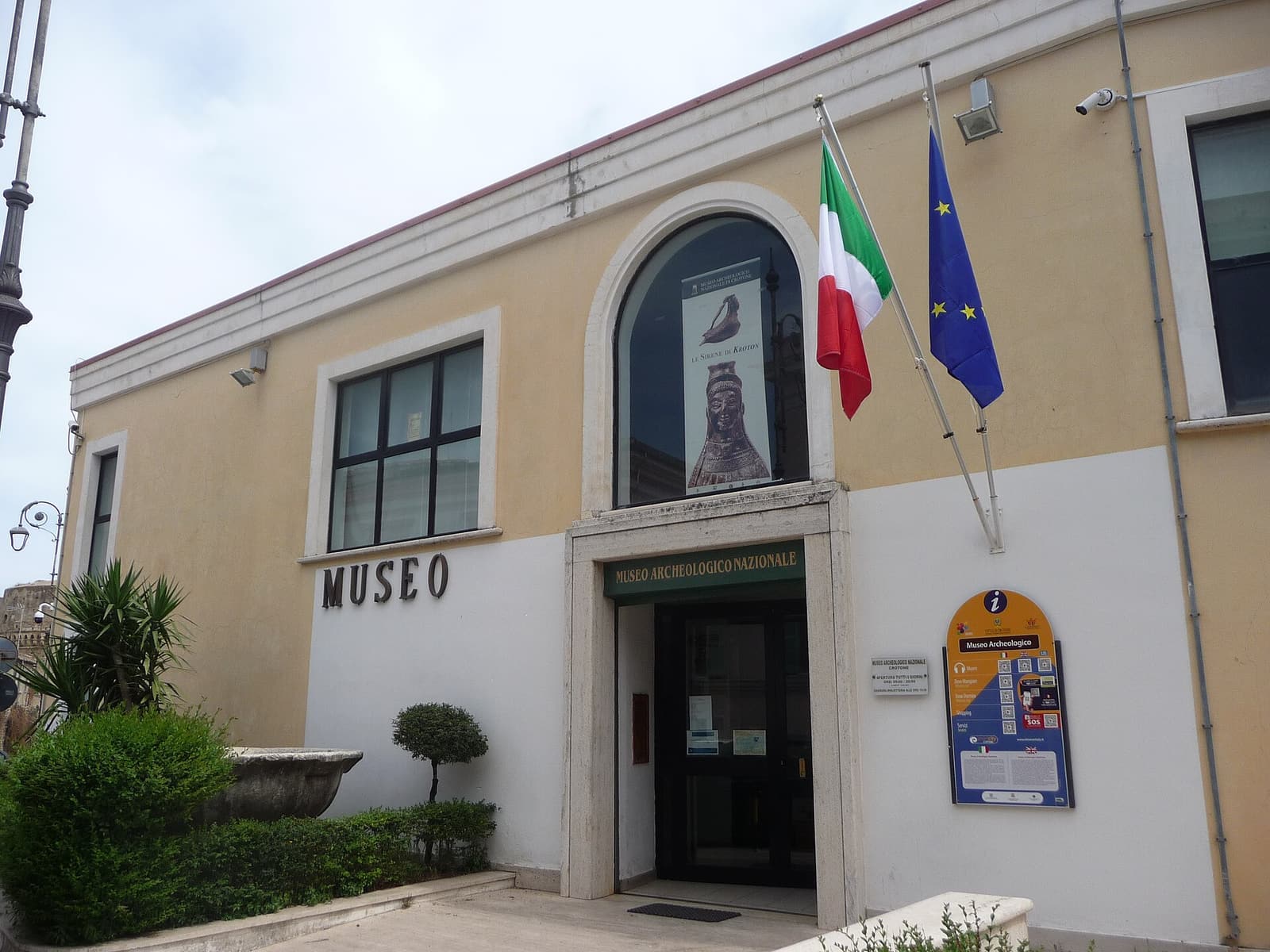
The Museo Archeologico Nazionale di Crotone stands in the old town, a short walk below the castle. Opened in 1968, it is the place to understand what Kroton was: a city founded by Achaean Greeks around 710 BC that grew rich on its harbour and its farmland, defeated its great rival Sybaris in 510 BC and became famous across the Greek world for its athletes, its doctors and the school of Pythagoras.
The galleries follow the story from prehistoric settlements through the Greek city and its sanctuaries to the Roman colony. Almost nothing of ancient Kroton survives above ground in the modern city, which makes the pottery, bronzes, architectural terracottas and coins here all the more valuable.
Top things to do at National Archaeological Museum
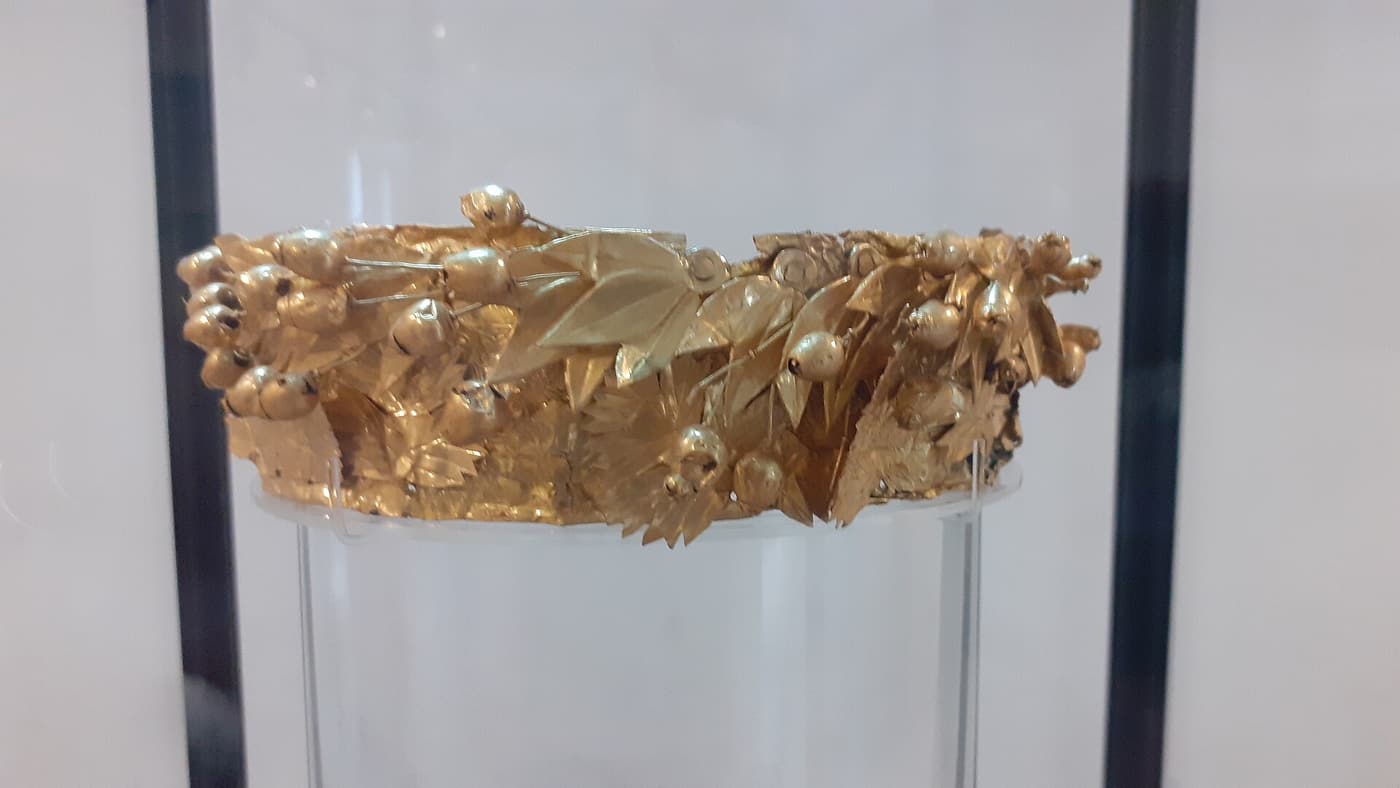
Stand in front of the Treasure of Hera
The museum’s masterpiece is a group of offerings found at Capo Colonna in the late 20th century. The star is a gold diadem wrapped in finely worked leaves and berries, made in the 6th century BC. Alongside it are small bronzes — a sphinx, a siren, a gorgon — and a bronze boat from Sardinia, proof of how far the sanctuary’s fame travelled.
Follow the rise of Kroton
Cases of pottery, weapons, votive figures and silver coins stamped with the tripod of Apollo — the city’s emblem — chart Kroton from its foundation to its golden age in the 6th and 5th centuries BC.
Look for Pythagoras and Milo
No personal relics survive of the philosopher who settled here around 530 BC or of Milo, the wrestler who won the Olympic crown six times. But the displays on the city’s life, cults and athletic culture give their stories a real setting.
How to get to National Archaeological Museum
- On foot: the museum is on Via Risorgimento in the old town, about ten minutes’ walk uphill from Piazza Pitagora and five from the castle.
- By car: park near the harbour or along the lungomare and walk up; the old town’s lanes are narrow and partly restricted.
- With a guide: the private Crotone walking tour covers the old town around the museum.
Insider tips
- State museums in Italy are often closed on Mondays, and hours here have changed over the years — check the current schedule before you go.
- The ticket is inexpensive; reduced and free categories apply as in other Italian state museums.
- Allow an hour to an hour and a half.
- Pair it with Capo Colonna on the same day: the museum in the heat of midday, the cape in late afternoon.
Best tours & tickets for National Archaeological Museum
These experiences pair well with a visit to National Archaeological Museum:
 Private walking tour from €340 per group
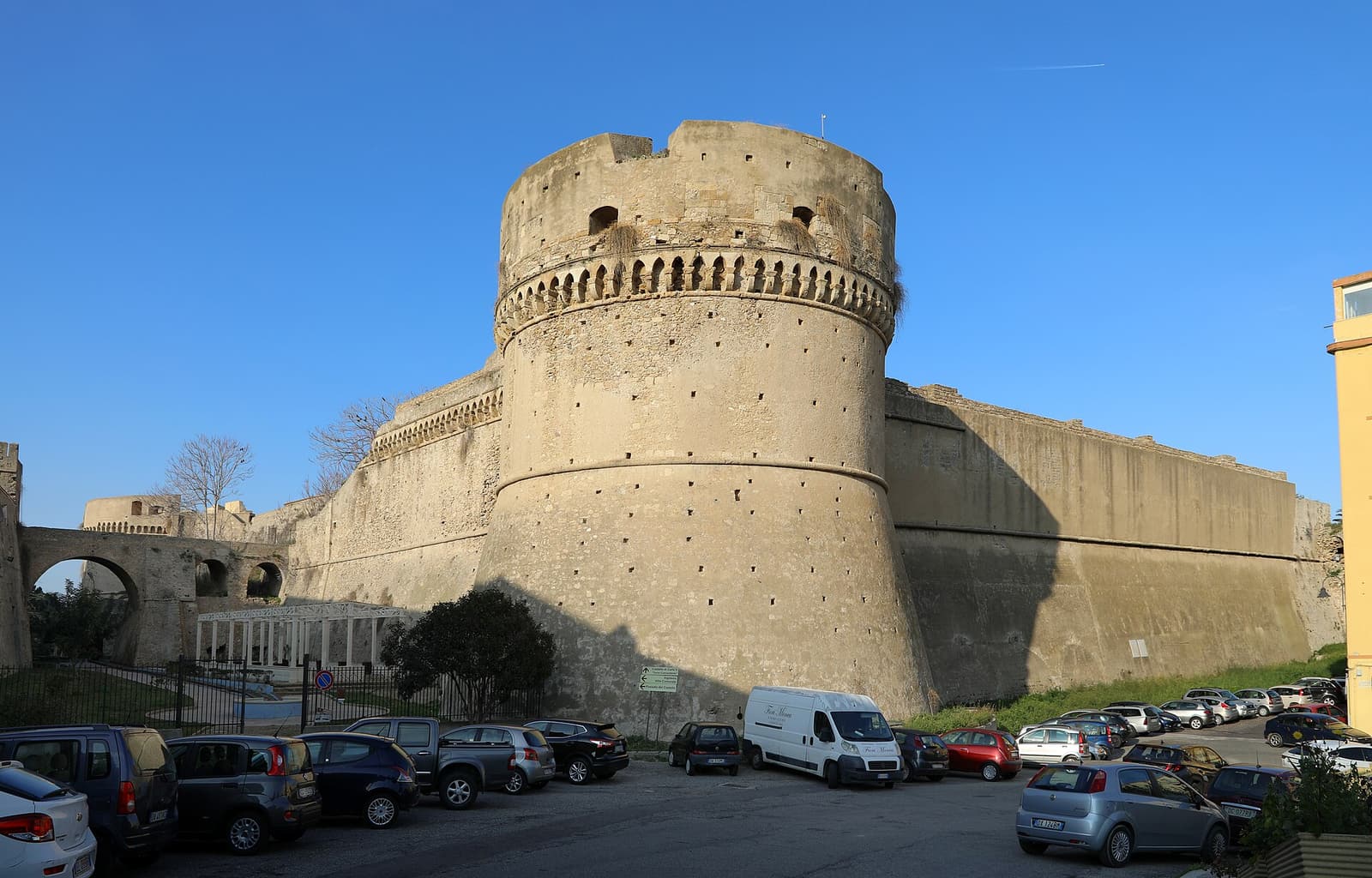
 Crotone Walking Tour: Magna Graecia and Ancient Kroton
A private guide walks you through the old town and explains what you cannot see for yourself: where the Greek city stood, why Pythagoras came here, how the Spanish fortress reshaped the hill. The price is per group — up to 25 people — so it is good value for families and groups, less so for a couple.
- The story of Pythagoras, Milo and ancient Kroton
- The castle of Charles V and the cathedral from outside
- Piazza Pitagora and the waterfront
 Entry ticket from €9
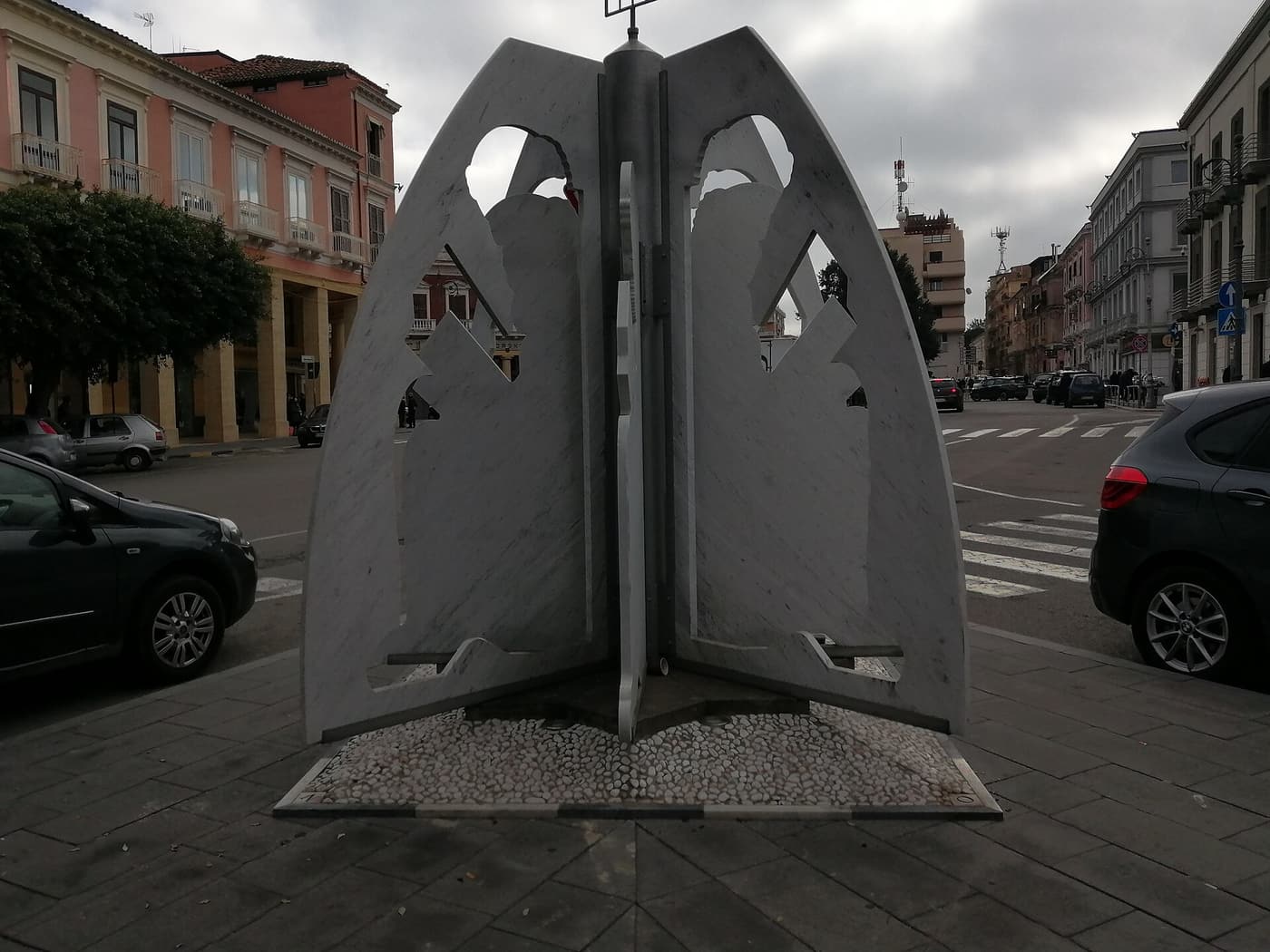
 Museum of Pythagoras: Admission Ticket to the Pythagoras 3D Exhibition
A low-cost ticket to an immersive exhibition on Crotone’s most famous resident, covering his ideas on number, music and harmony. It works well as a first stop with children or on a hot afternoon, before seeing the real finds in the archaeological museum.
- An immersive introduction to Pythagoras
- Number, music and harmony explained
- Wheelchair accessible