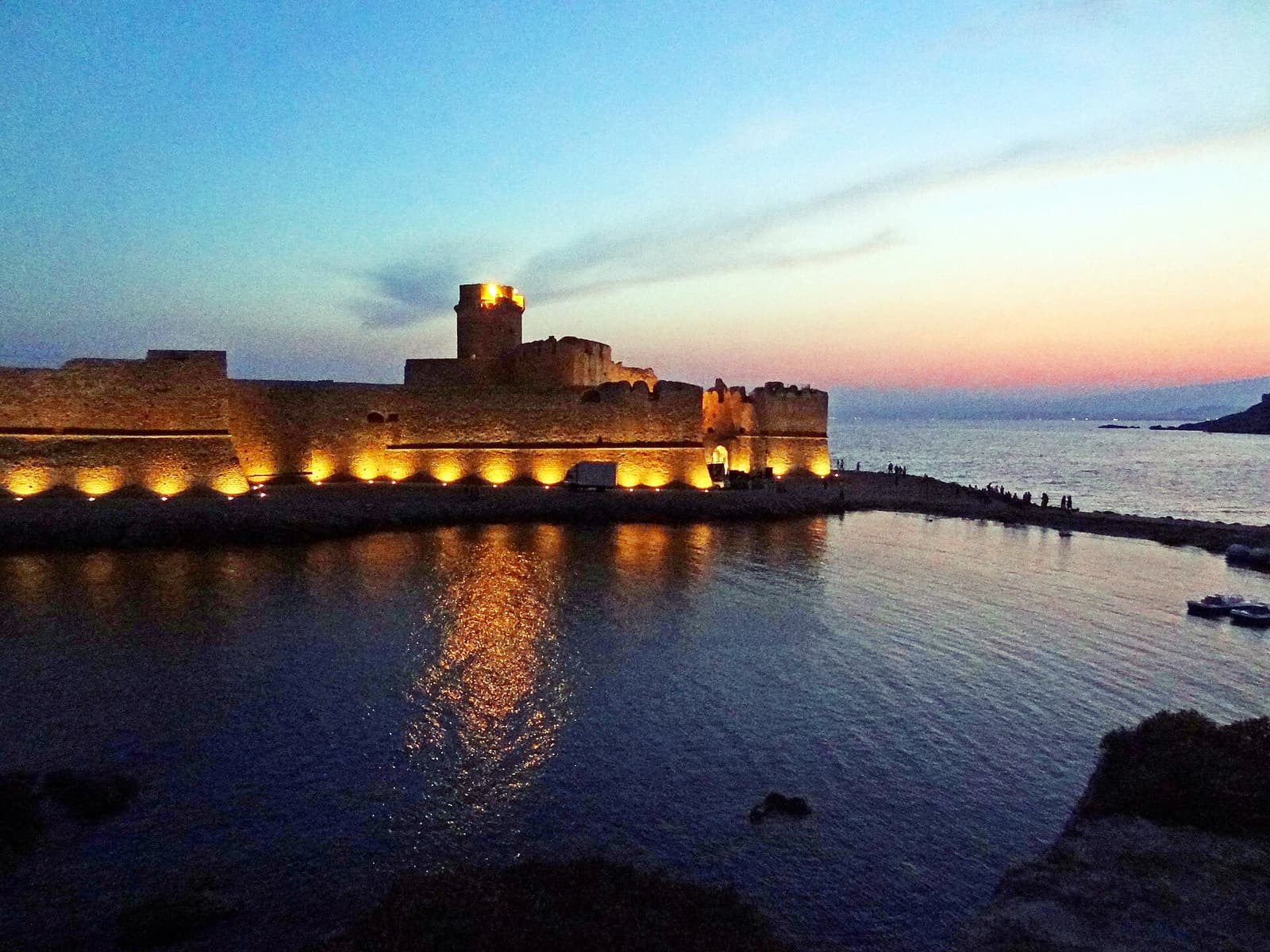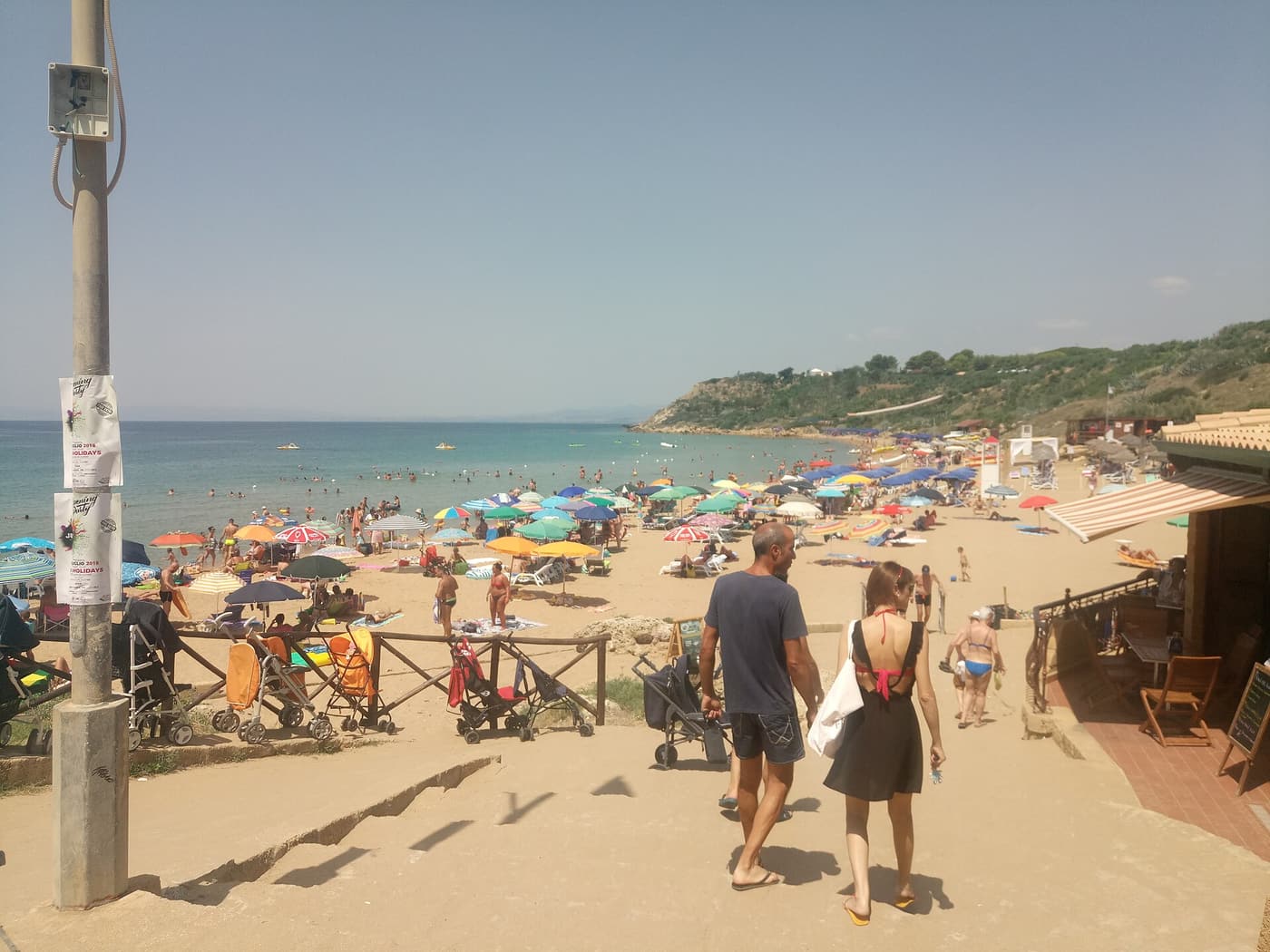
The short answer: late May to June and September to early October. The weather is warm and settled, the sea is good for swimming, everything is open, and you avoid both the fierce heat and the Italian holiday crowds of August.
Crotone has one of the driest, sunniest climates in mainland Italy. Summers are hot and almost rainless; winters are mild and bright on the coast, with most of the year’s rain falling between October and March. The Sila plateau, an hour inland, has a completely different mountain climate.
Month by month
Figures are long-term averages, rounded — individual years vary.
| Month | Daytime high | Sea | What to expect |
|---|---|---|---|
| January–February | ≈ 13–14 °C | ≈ 14–15 °C | Mild, quiet, some rain; snow in the Sila |
| March | ≈ 16 °C | ≈ 15 °C | Spring begins; green hills, few visitors |
| April | ≈ 19 °C | ≈ 16 °C | Wildflowers; good for walking and sites |
| May | ≈ 24 °C | ≈ 19 °C | Warm and bright; the great May festival |
| June | ≈ 28 °C | ≈ 23 °C | Beach weather without the crowds |
| July | ≈ 31–32 °C | ≈ 26 °C | Hot and dry; lively evenings |
| August | ≈ 31–32 °C | ≈ 27 °C | Peak season; busiest and dearest |
| September | ≈ 28 °C | ≈ 25 °C | Warm sea, calmer beaches, grape harvest |
| October | ≈ 23 °C | ≈ 22 °C | Still swimmable early on; first rains |
| November–December | ≈ 14–18 °C | ≈ 17–19 °C | Quiet; short days; olive harvest |
Spring (March to May)
The best season for sightseeing. The hills of the Marchesato are green, Capo Colonna is carpeted with flowers, and you can walk the archaeological park at midday in comfort. The sea is cool until late May. Easter brings processions in the towns of the province.
The highlight of the year in Crotone is the feast of the Madonna di Capo Colonna in May, culminating around the third Sunday with the night pilgrimage from the cathedral to the cape. If you want to see the city at its most intense, come then — and book accommodation ahead. More on the old town and Duomo page.
Summer (June to August)
June is arguably the best month of all: long days, warm sea, open lidos and space on the sand. July is hot, with highs regularly above 30 °C. August, and especially the week around Ferragosto (15 August), is when Italy goes on holiday: Le Castella and the coves of Capo Rizzuto are packed, prices peak and you need to reserve everything.
- Plan sights for early morning and late afternoon; spend the middle of the day in the water or in the museum.
- When the coast bakes, the Sila is typically around ten degrees cooler.
- Summer evenings bring concerts, food festivals (sagre) and open-air events in the towns and villages.
Autumn (September to November)
September rivals June: the sea is at its warmest after August, the crowds have gone, and it is harvest time in the vineyards of Cirò. Swimming is usually pleasant well into October. From mid-October the weather becomes less reliable, with occasional heavy downpours, and seaside resorts such as Le Castella wind down — some hotels and restaurants close for the winter. In the Sila, autumn means mushrooms, chestnuts and beech woods turning colour.
Winter (December to February)
Mild on the coast — sunny days often reach 14–15 °C — and very quiet. The city, the museum and Santa Severina are all perfectly visitable, though hours are shorter and the beach resorts are largely shut. This is the season for the Sila: snow usually lies from around late December to March, with skiing at Lorica, Camigliatello and Villaggio Palumbo and guided snowshoe walks through the forest.
Best time for…
- Swimming and snorkelling: mid-June to late September.
- Archaeology and hill towns: April to June, September and October.
- Lowest prices: November to March, excluding Christmas and Easter.
- Wine: September and early October for the harvest; any time for tastings.
- Hiking in the Sila and Valli Cupe: May to June and September to October.
- Skiing and snowshoeing: January and February.